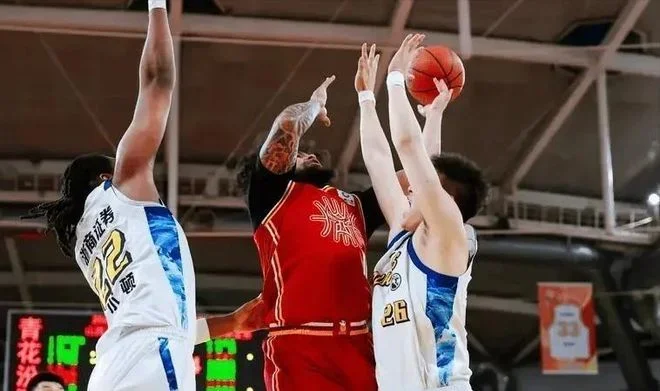

Few expected the Guangsha Lions, missing star guard Sun Minghui, to fight back from the brink of elimination on Shanxi’s home court. This CBA quarterfinal clash ended with Guangsha dramatically pulling off a 86-81 victory, tying the series 1-1 and setting up a decisive Game 3 in Hangzhou. Many had written off Guangsha when they seemed cornered, but after this game, everyone saw the resilience these young players possess.

From the opening tip, the intensity was palpable. Both teams threw everything into defense, with combined points barely reaching double digits in the first five minutes due to abysmal shooting percentages. Neither side wanted to make the first mistake.
With about four minutes left in the first quarter, Guangsha finally found their rhythm, using drives and kick-outs from Tucker and Brown to build a lead. Shanxi quickly countered by bringing in Zhang Ning, whose three-pointers kept the deficit manageable.
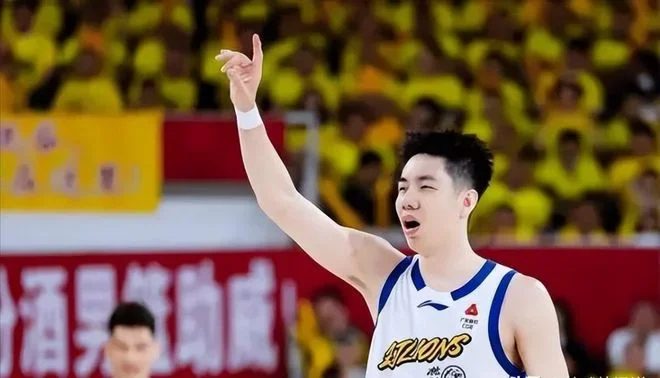
Tucker was vastly improved from his last outing, repeatedly penetrating Shanxi’s defense and finding Zhao Jiaren for open threes. After a timeout, Shanxi’s adjusted lineup held the score close, preventing Guangsha from pulling away.
Ultimately, the game was decided on the boards. Guangsha grabbed 18 offensive rebounds, creating numerous second-chance opportunities. Shanxi simply could not secure the paint, and that small detail made all the difference.
Hu Jinqiu was a true warrior, finishing with 17 points and 11 rebounds. In the fourth quarter, he fought for multiple crucial offensive boards, each one a dagger to Shanxi’s hopes.
Zhu Junlong’s 10 points might not jump off the stat sheet, but his impact went beyond numbers. He hit critical threes, defended stoutly in the final period, opened up space for teammates, and snatched vital rebounds—a silent hero for Guangsha.
Both teams played at a frantic pace, and neither shot well—Shanxi at 40%, Guangsha even lower at 39.1%. In the end, it came down to which stars could make tough plays under pressure.
Shanxi had a golden chance to turn the game in the fourth quarter, but Diallo and Yumiti went cold, wasting excellent scoring opportunities. Brown on Guangsha’s side also struggled, but Hu Jinqiu stepped up when it mattered most.
In the final stretch, Shanxi employed full-court pressure, forcing a long turnover from Brown and cutting the deficit to just three points. With 30 seconds left, the entire arena held its breath—the tension was palpable even through the screen.
Guangsha missed a three-pointer but again grabbed the crucial offensive rebound, and Diallo’s subsequent misses finally sealed the outcome.
Both coaches constantly adjusted tactics, unwilling to concede. Shanxi’s Pan Jiang called multiple timeouts, shifting lineups to chase the lead. Guangsha’s Wang Bo kept searching for offensive solutions, relying on Tucker and Brown to pressure the defense.
Tucker, after a sluggish previous game, attacked the rim relentlessly this time, drawing fouls. Sang普森 and Lin Bingsheng also held up defensively and finished at the rim when needed.
Zhang Ning impressed off the bench for Shanxi, hitting 4 of his 3-pointers in 26 minutes for 13 points—one of few bright spots. But Yumiti went 0-for-4 from beyond the arc, and his cold hand seemed to infect the team, unsettling their rhythm.
The final stats were telling: Shanxi committed 29 fouls and 12 turnovers, gifting Guangsha 36 free throws, of which they made 24. Guangsha had 25 fouls, but Shanxi only scored 20 from the line. That five-point disparity swung the game. Offensively, Shanxi missed too many open looks and failed to capitalize on extended possessions.
The inability to contain Hu Jinqiu in the fourth quarter was a fatal flaw for Shanxi. After Liu Chuanxing left the game, Guangsha’s interior attack grew more potent, with Shanxi repeatedly losing assignments on rebounds.
In one sequence, Guangsha grabbed four offensive rebounds in a single possession. Even if the first shot missed, their relentless crashing wore down the opponent. If Guangsha brings this same energy to Game 3, Shanxi will have a tough time winning on the road.
Hu Jinqiu’s double-double and key offensive boards stood out. Barry Brown Jr. shot just 3-of-15 for 19 points and went scoreless in the fourth quarter, but his teammates carried the load. Zhu Junlong’s all-around 34-minute performance—including a crucial three-pointer and steady defense—held the team together.
For Shanxi, aside from Zhang Ning’s 13, Yumiti finished with 0 points on 0-for-4 shooting, essentially invisible. The free-throw disparity was the story: Guangsha won the foul battle and, consequently, the survival game.
In the latter part of the fourth, Shanxi’s players showed clear fatigue, repeatedly losing rebound battles and failing to execute coherent offense. The coach paced the sideline in frustration, but the players seemed sluggish. Was it exhaustion or a lack of grit? The entire Shanxi squad will need to reflect on that after the game. Meanwhile, Guangsha displayed remarkable resilience, never collapsing even when the lead shrank to a single point.
Guangsha’s tenacity and late-game poise have reset the series to a 50-50 proposition, with all the pressure now on the third and decisive game. If Shanxi wants to win on the road, they must first solve their rebounding and interior defense problems. Can Guangsha sustain this level of fight until the expected return of Sun Minghui? The outcome remains wide open, and the next clash promises to be another grind.
Fans are now guessing which team has the edge and which key player will step up to shape the series. The suspense is at its peak, with all eyes on the ultimate showdown.